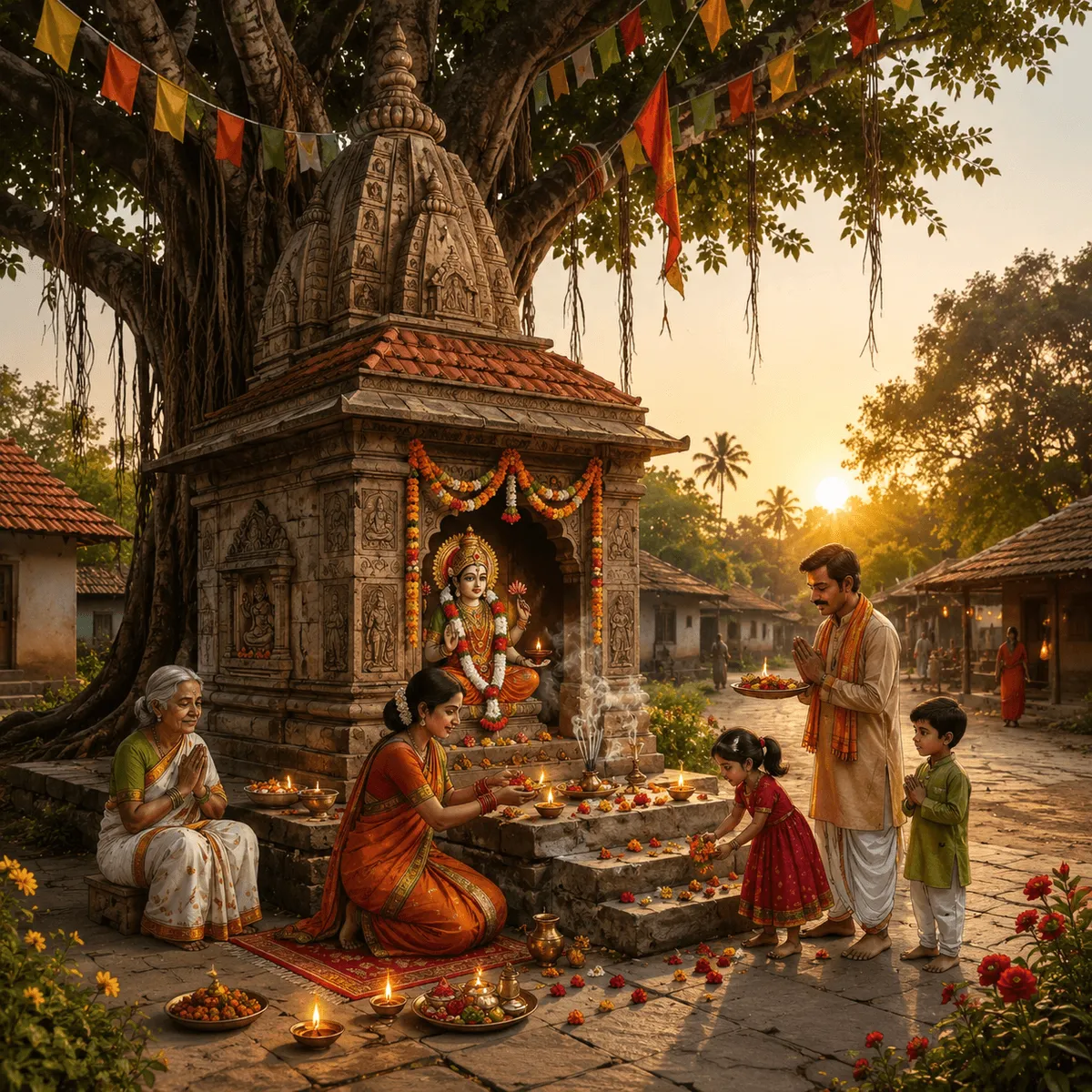
What Is Kul Devta (कुल देवता)?
Kul Devta (कुल देवता) literally means “deity of the kul (clan)”. It is the specific god or goddess that a family has worshipped for generations. The female form is Kul Devi (कुल देवी). Some families have both.
Unlike ishta devta (personal chosen deity), kul devta is inherited through the patrilineal line. A son inherits his father’s kul devta. After marriage, a woman traditionally adopts her husband’s family’s kul devta while continuing to respect her birth family’s deity.
The concept exists across all Hindu communities — from Brahmins to Rajputs to Jats to scheduled castes. Each kul has its own unique deity, often associated with a specific temple in the family’s ancestral region.
Why Kul Devta Matters
- Spiritual anchor — The kul devta is believed to protect the family across generations. Regular worship maintains this divine connection.
- Vivah (Marriage) — During Hindu weddings, the kul devta of both families is invoked. Many communities will not finalise a marriage without confirming kul devta compatibility.
- Griha Pravesh — When entering a new home, the kul devta puja is performed before any other ceremony.
- Mundan and Namkaran — First haircut and naming ceremonies often invoke the kul devta.
- Shraadh — Ancestral rites are performed in the name of the kul devta.
- Cultural identity — Knowing your kul devta connects you to centuries of family tradition and to a specific sacred place.
Why Many Families Have Forgotten Their Kul Devta
Several factors have caused this knowledge to fade:
- Urban migration — Families moved from villages (where the kul devta temple is) to cities, losing touch with the practice.
- Nuclear families — In joint families, grandparents passed on this knowledge naturally. Nuclear families broke this chain.
- Westernisation — Younger generations focused on modern education often dismissed traditional practices as superstition.
- Partition and displacement — Families displaced during Partition lost connection to their ancestral temples in Pakistan/Bangladesh.
- No written records — Most families never wrote down their kul devta name — it was transmitted orally.
How to Find Your Kul Devta — 7 Methods
- Ask your grandparents or great-uncles — The most reliable source. Ask specifically: “Hamare kul devta kaun hain? Unka mandir kahan hai?”
- Ask your family pandit — If your family has a kul purohit (family priest), he almost certainly knows. Pandits maintain these records.
- Check your gotra — Some gotras are associated with specific kul devtas. For example, many families of Bharadwaj gotra worship Shiva, while Kashyap gotra families often worship Vishnu forms.
- Check your ancestral village — The kul devta’s temple is usually in or near the family’s ancestral village. If you know your mool sthan, research which deity has the oldest temple there.
- Contact panda records — Tirth purohits at Haridwar/Gaya sometimes record the kul devta alongside family details in their bahi registers.
- Community associations — Many caste/biradari associations have compiled lists of kul devtas for their member families.
- Kundali (Birth Chart) — In some traditions, the kul devta can be inferred from the 9th house (Dharma Bhava) in your janam kundali. Consult a knowledgeable astrologer for this interpretation.
Common Kul Devtas by Community
Note: These are generalisations. Each specific family may have a different kul devta even within the same community. Always verify with your own elders.
Kul Devta vs Ishta Devta — What's the Difference?
- Kul Devta — Inherited. Same for the entire family/clan. You don’t choose it — it’s passed down.
- Ishta Devta — Personal. Chosen by the individual based on spiritual inclination. You can choose Krishna even if your kul devta is Shiva.
- Gram Devta — Village deity. Worshipped by all families in a village regardless of their kul devta.
Hindu tradition encourages worshipping all three. The kul devta gets priority during family rituals (samskaras), while the ishta devta is for personal sadhana.
How to Worship Your Kul Devta
- Annual visit — Visit the kul devta’s temple at least once a year, ideally with the family. Many families do this during Navratri or on a specific tithi.
- Home puja — Keep a photo or murti of the kul devta in your home mandir. Light a diya and offer prasad daily or weekly.
- Kul devta puja during festivals — Navratri, Dussehra, and family-specific occasions are prime times for kul devta worship.
- Vivah puja — Before the wedding, both families perform kul devta puja to seek blessings.
- Namakarana — When naming a newborn, the kul devta is invoked to bless the child.
Recording Kul Devta in Your Family Tree
ParivaarPro includes a dedicated Kul Devta field in the family profile. When you build your family tree, record your kul devta’s name and temple location. This ensures the knowledge is preserved digitally and passed to future generations.
Also record your gotra and mool sthan — together, these three fields create a complete cultural identity record that no Western family tree tool provides.
Kul Devta FAQ (अक्सर पूछे जाने वाले सवाल)
- Kul devta kaise pata kare agar koi elder nahi hai?
- If no elder remembers, research using your gotra and ancestral village (mool sthan). Many caste/biradari associations and the panda bahi records at Haridwar, Gaya and Nashik list the kul devta alongside family details, which can help you reconstruct it.
- What is the difference between kul devta and ishta devta?
- Kul devta is inherited — the same deity for the entire clan, passed down the patrilineal line. Ishta devta is personal — the deity you choose for your own spiritual practice. You can worship both; the kul devta takes priority during family samskaras.
- Kya kul devta change ho sakta hai?
- Traditionally no, because it is inherited rather than chosen. In rare cases a family adopts a new kul devta after a major spiritual experience or on a guru’s guidance, but the inherited deity is the norm.
- Woman ka kul devta shaadi ke baad kya hota hai?
- Traditionally a woman adopts her husband’s family kul devta after marriage, while still being free to honour her birth family’s deity.
- Kya Muslim ya Christian families mein kul devta hota hai?
- The concept is specific to Hindu families. However, many families that converted from Hinduism still retain memory of their ancestral kul devta and ancestral village.